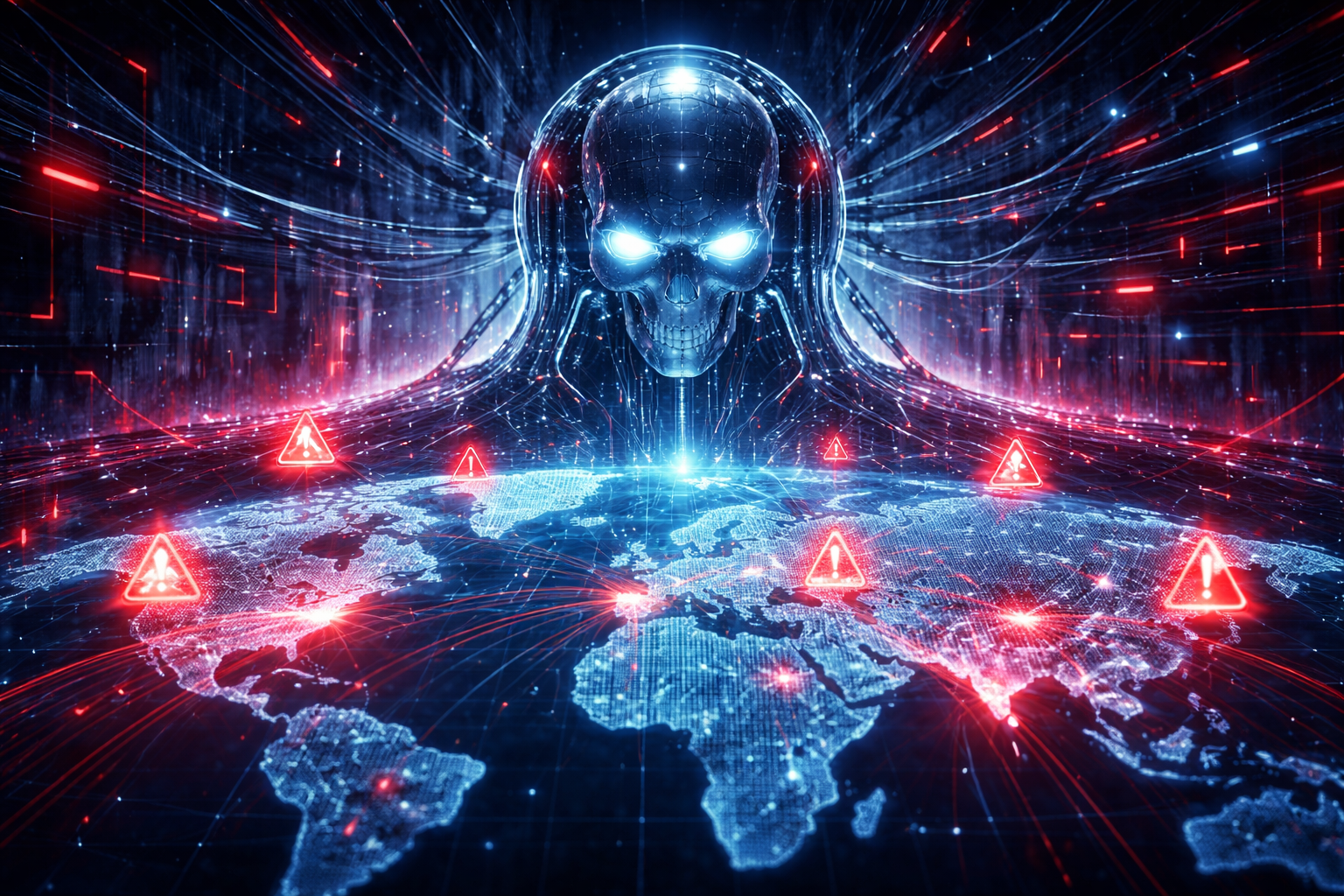
Entering a New Era of Digital Threats.
In 2026, there will be a huge transformation in the cybersecurity environment. Cybercriminals are not entirely using manual methods of hacking anymore, with the fast development of artificial intelligence. Rather, they are implementing AI-based devices that can provide complex attacks on their own. This change has brought about a novel and frightening menace of autonomous hacking.
The AI-based cybercrime is not only more rapid, but it is more intelligent, dynamic and can adapt in real-time. The old-fashioned security systems, which have always been highly dependent on predefined rules and human supervision, are not able to cope with these smart threats. This is leading to unprecedented risks to organizations, governments and individuals.
What is AI-Driven Cybercrime?
Operationalization and Main Idea.
AI-powered cybercrime Malicious actions in which artificial intelligence technologies are employed to automate, improve, and escalate cyberattacks are called AI-powered cybercrime. Such attacks have capabilities to analyze large volumes of data, determine vulnerabilities and make use of it without manual intervention.
Contrary to conventional hacking, AI-based attacks are also learned with every attack. This implies that each unsuccessful attack will enhance the system and subsequent attacks become more effective.
Major distinctive features of AI Cybercrime.
- Algorithms that are self-learning and which advance.
- Capability of going around conventional firewalls and detection.
- Light speed of execution of attacks on several targets.
- One-on-one phishing and social engineering attacks.
- Making decisions independently of humans.
Hacking on Autonomous.
The way Autonomous Systems Work.
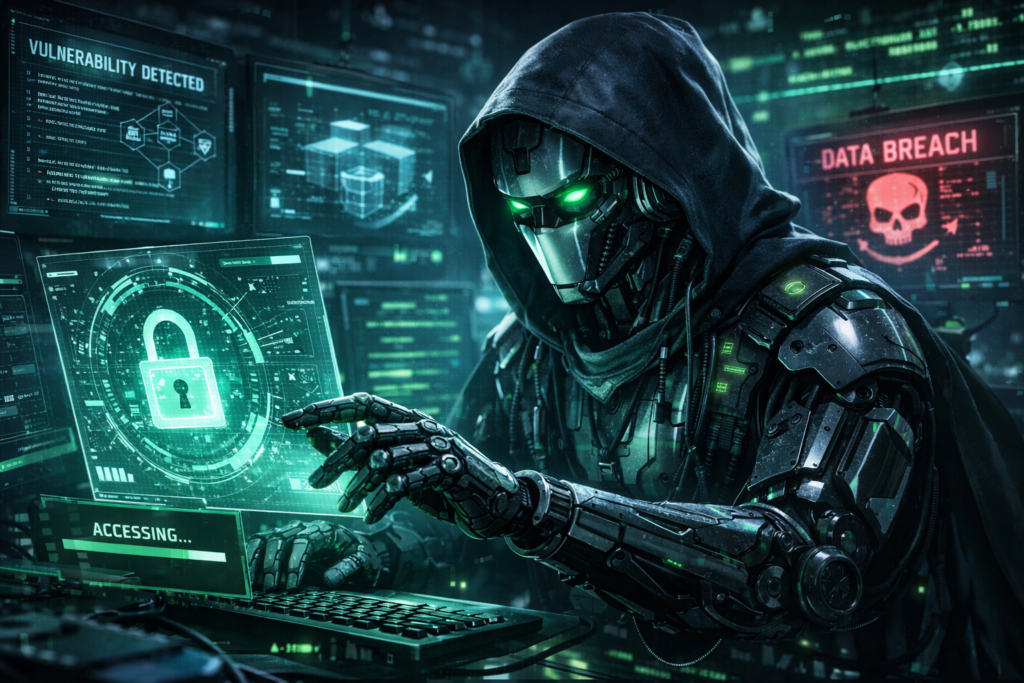
Autonomous hacking is the method that implies AI systems that can find their targets and plan attacks on their own, execute breaches, and conceal their footprints. These systems are based on machine learning models that have been trained with past data of cyberattacks and simulate and optimize hacking strategies.
Considering the example of an AI-powered system that will be able to scan thousands of networks at once, detect weak entry points and attack in just a few seconds, human hackers cannot achieve this on their own.
Forms of Autonomous Attacks.
- Phishing campaigns that are operated by AI and are user-specific.
- Scanning and exploitation of vulnerabilities in an automated manner.
- Deepfake-based identity fraud
- Malware that is self-propagating and is able to adapt to defenses.
- Smart botnets which are dynamically coordinated attacks.
Why 2026 is a Turning Point.
More Accessibility of AI Tools.
AI technologies are increasing in access and price. Even low-skill attackers are now able to implement sophisticated systems of cyberattacks, and it is possible due to the open-source models and underground markets.
Data and Connections Blast.
As the number of IoT devices, cloud systems, and intelligent infrastructure is increasing, the attack surface has grown exponentially. It is possible to use this interconnected environment more effectively than ever by AI systems.
Traditional weakness of Security Systems.
The majority of existing cybersecurity frameworks are responsive. They pick up the threats when they happen. Nonetheless, AI-powered attacks are real-time and they can even go undetected.
Practical Effect of AI Cybercrime.
Financing Industry Risk.
Financial institutions and banks are good targets. The analysis of patterns of transactions and imitation of legitimate behavior makes detection of fraud very challenging and AI is able to do it.
National Security threats.
Self-driving hacking robots have the capability to attack vital infrastructure like power grids, transportation systems, and defense systems, which are critical to national security.
Data Mining of personal data.
People are becoming susceptible towards AI-based frauds. The personalized phishing messages, voice cloning, and deepfake videos have the ability to mislead users into providing sensitive details.
Problems in fighting AI-Driven Attacks.
Speed vs. Human Response.
Machine speed attacks and human response are much slower than AI attacks. Such a disconnect presents an enormous defense deficit.
Shortage of competent Cybersecurity Experts.
The world lacks cybersecurity professionals who can deal with threats posed by AI. This complicates the fight against organizations remaining safeguarded.
Gaps in Ethics and Regulations.
The laws have failed to keep abreast with technology. The abuse of AI in cybercrime remains unclear in most of the legal systems.
2026 and beyond Defense Strategies.
AI vs AI Approach.
To deal with AI-enabled cybercrime, organizations will have to implement AI-enabled defense systems. These systems are able to identify anomalies, anticipate attacks and also respond in real time.
Zero Trust Security Model.
The Zero Trust model makes sure that there is no automatic trust of any user or system. Any access request is authenticated minimizing the chances of unauthorized access.
Threat Intelligence and continuous monitoring.
Threats must be detected and mitigated in real-time by having real-time monitoring and advanced threat intelligence systems to prevent the escalation of threats.
Future of cybersecurity.
The dawn of self-hacking is evidence of a transition to an even more advanced and hazardous online space. Cybersecurity is no longer a protection issue, but rather a predictive and adjustive one.
To counteract the threats, organizations should invest in new technologies, educate the employees, and use proactive security practices. People also need to be more enlightened about online threats and to be safe internet citizens.
The future of cybersecurity will be the struggle of attackers and defenders that are run using AI.
Conclusion
The largest threat of 2026 security is AI-powered cybercrime and autonomous hacking. These technologies have turned cyberspace attacks into smart, big, and most efficient operations.
In order to lead the pack, there is a need to radically change the approach towards cybersecurity. Adopting AI-powered defense, enhancing regulations and raising awareness are all important measures toward a safer digital future.
Frequently Asked Question (FAQs).
1. Why is AI-driven cybercrime more threatening as compared to conventional hacking?
The threat of AI-driven cybercrime is even more threatening since it can learn, adapt and attack very fast without human interference, thus, it becomes difficult to detect and prevent.
2. This is in simple terms what is autonomous hacking?
Autonomous hacking is the term used to define the cyberattacks, which are performed by artificial intelligence (AI) systems that are capable of identifying vulnerabilities and using them without any human intervention.
3. Is it possible to use AI as a means of cybercrime protection?
Defense Yes, AI can be applied in defense. Artificial intelligence security tools have the ability to detect abnormal behaviour, anticipate dangers and react quicker than conventional technologies.
4. Whom are the AI-powered cyberattacks most threatening?
Companies, governments and individuals are also vulnerable, particularly the ones that deal with sensitive information or those that operate digital systems that are connected.
5. What can people do to safeguard themselves against AI cyber threats?
To guard themselves, people should employ strong passwords, implement a multi-factor authentication system, avoid suspicious links, and keep up-to-date with cyber threats.