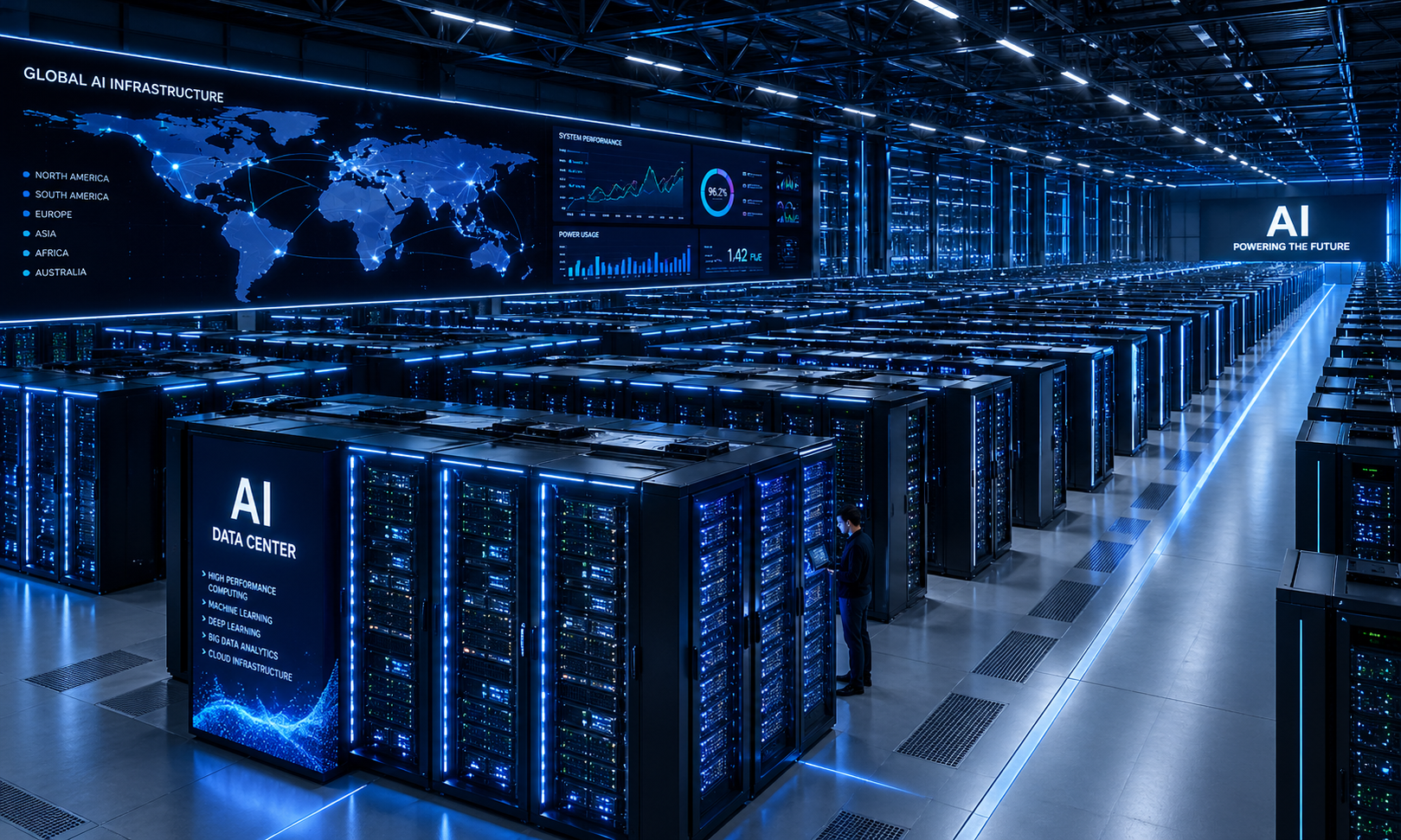
The world of technology is in a new era, the era of not only software innovation, but of a struggle over dominance in AI hardware. Firms such as OpenAI, Google, and semiconductor leaders such as NVIDIA and Intel are in a race to produce the next generation of chips that will be used in artificial intelligence. This AI hardware race is transforming the industries, defining the competition and establishing the future of computing.
The Sow to Hardware Power.
AI Requires Special Hardware.
Large language models and generative AI systems are AI models that are highly computationally taxing. The conventional CPUs are no longer effective in training and deploying such models effectively. This has caused an increase in the demand of specialized chips like GPUs, TPUs and dedicated AI accelerators.
This has been dominated by companies such as NVIDIA that have taken the lead in high-performance GPUs, overtaking them to be the foundation of AI infrastructure. In the meantime, Google has designed its own Tensor Processing Unit (TPUs), to streamline machine learning workloads.
The Emerging Custom AI Chips.
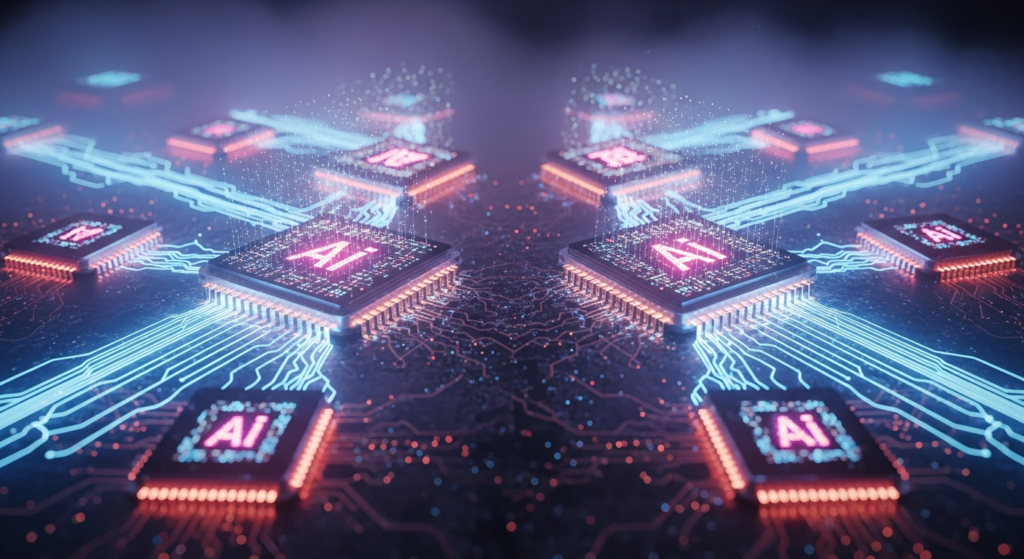
The actual trend is towards custom silicon. Companies are not only building their own hardware based on their AI models but do not only use third-party chips.
- OpenAI is considering the development of its own chip so as to be less reliant on external suppliers.
- Microsoft has also unveiled the use of Azure AI chips to enhance the cloud system.
- Apple has been incorporating neural engines into its devices in on-device AI.
Such vertical integration enables a closer optimization of hardware and software, which is much more efficient and effective.
Major players in the AI Hardware War.
Early Lead of NVIDIA.
NVIDIA has also become the leader in AI hardware and a majority of modern AI systems are powered by its GPUs. Its CUDA software ecosystem has formed a high developer lock-in, such that competitors are not able to easily shake up its dominance.
TPU Strategy of Google.
Google is placing a big bet on TPUs, which specialize in machine learning activities. The chips are prevalent in Google Cloud and drive services within Google such as search, translation, and AI assistants.
Strategic Growth of OpenAI.
OpenAI is becoming more conscious of the fact that the use of third-party hardware alone may be a constraint to scalability. Potentially investing in custom chips would allow it to save costs, better performance, and have greater control over its infrastructure.
Chip Giants Fighting Back.
- Conventional semiconductor firms are stepping up their efforts:
- Intel is specializing in AI accelerators and increasing its foundry business.
- AMD is providing competitive alternatives of the GPUs to NVIDIA.
- TSMC is still the leader in high-tech chip production in the world.
Effect on the Tech Industry.
Transformation of Cloud computing.
Cloud systems are transforming into AI-first systems. The vendors such as Amazon Web Services and Microsoft Azure are designing their own chips to offer affordable and performance-based AI services.
Disruption Ecosystem Start-ups.
AI hardware is prohibitive to startups because of its high price. The powerful GPUs are not readily available, and smaller firms will have to use cloud providers or find another option. Nonetheless, it also gives a chance to new hardware startups to be innovative.
Supply Chain Problems.
The semiconductor supply chain is straining because of the growing demand. A lack of chips, geopolitical conflicts, and production issues are affecting prices and supply across the globe.
More Implications on an Industry Level.
democratization of AI vs centralization.
Although AI tools are increasingly becoming accessible, the hardware to execute them on a large scale is being concentrated in the hands of a small number of large players such as Google and Microsoft. This leads to issues of power concentration in the AI ecosystem.
The Importance of Open-Source Hardware.
There are companies and organizations that are considering open-source chip designs, to be less reliant on proprietary systems. This may result in a decentralized and competitive hardware ecosystem, in the future.
War on Talent in Semiconductor Industry.
The need for talented engineers in chip design and AI hardware is on the rise. The companies are not only competing in the market share, but also in the best talents in semiconductor innovation.
Future trends in AI Hardware.
Expansion of Edge AI.
AI is shifting away to centralized data centers to edge computing, such as smartphones, wearables, and self-driving cars. This minimizes the latency and allows real-time decision-making.
Energy-Efficient Computing
One of the challenges is energy consumption. The chips of the future will be more efficient, used to consume less power, but with the same level of performance.
Next-Gen and quantum computing.
The newest technologies such as quantum computing have the potential to transform AI hardware, but are still in their infancy.
Conclusion
The war of AI hardware is a groundbreaking development in technology. With human companies such as OpenAI, Google, and major chipmakers pushing the limits, the question is now on who owns the technology behind intelligence. This war will not only have an impact on the leadership in terms of technology, but also on the way AI is accessed, scaled, and controlled in the future.
FAQs
1. What is the AI hardware war?
It can be defined as the fact that the tech firms are competing to come up with more advanced chips that can serve the AI systems in a better and more efficient and at scale.
2. What is the importance of custom AI chips?
Specialized chips are specialized in particular AI tasks, which enhance the performance at a lower cost and energy consumption.
3. What company is on the forefront of AI hardware?
The current market leader, NVIDIA, is facing stiff competition as its competitors are gaining swiftly.
4. What is the impact of this to startups?
High costs of hardware might be a problem to startups, but cloud-based AI may be beneficial.
5. What will happen to AI hardware?
The future also has edge AI, energy efficient chips and perhaps quantum computing breakthroughs.