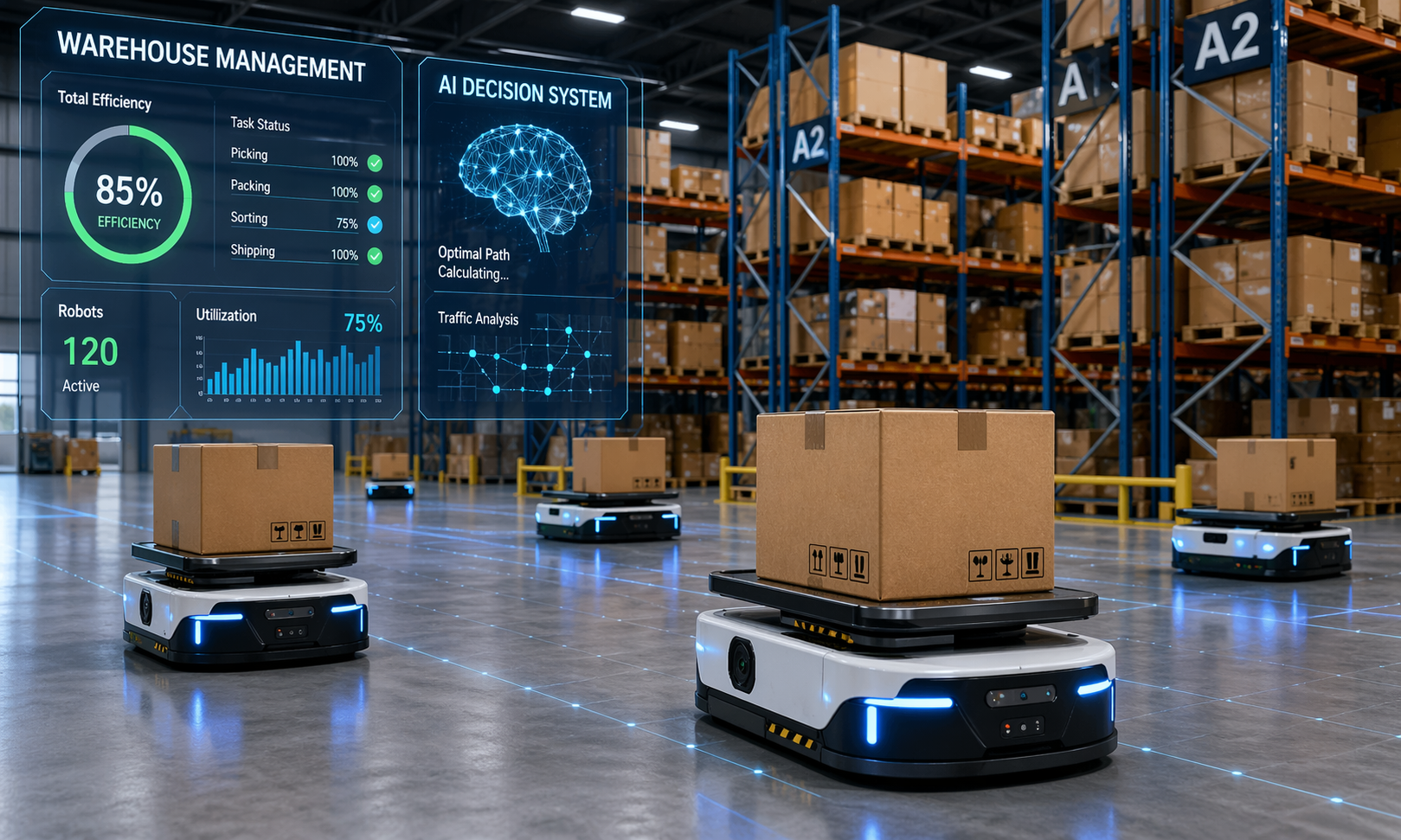
The intersection of the Agentic and Physical AI is creating a new wave of innovation that is strong and capable of delivering new solutions in which machines cease to be tools but form the decision-makers. Such systems are programmed to think, adapt and be able to act on their own in the real-world. Innovation in the logistics, healthcare, manufacturing, agricultural, and urban infrastructure sectors is being pioneered by startups in the industry by utilizing this mix to create autonomous machines.
Due to the increased demand of automation all over the world, companies are investing in more intelligent systems that will not require people to work on this system much. This is not only a change in terms of efficiency, but of developing systems that are able to address complex issues, react to dynamic environments, and constantly innovate as a result of learning.
Knowledge about Agentic AI and Physiological AI.
What is Agentic AI?
Intelligent systems capable of operating without human oversight, formulating objectives, making decisions and acting on those decisions are called agentic AI. In contrast to the conventional AI models, which are extremely dependent on instructions, agentic systems are developed to interpret the complex situations, plan several steps forward, and modify their behavior according to the results. These systems are frequently based on reasoning, memory and feedback loops to make them more of an autonomous decision-maker than a tool.
What is Physical AI?
Physical AI involves the application of AI to the physical environment with machines such as robots, self-driving cars and drones. These systems interface with the real-world environments through sensors, cameras and actuators. They have to handle real-time data and react immediately to changes and, therefore, are much more complicated than digital AI systems. Other challenges that physical AI systems have to address are movement, uncertainty and environmental variability.
The Power of the Combinations.
When Agentic AI comes together with Physical AI, it produces machines which are capable of thinking and acting independently. This integration enables systems to comprehend the environment around and make sound decisions, as well as perform actions without any human intervention. The outcome is a novel generation of intelligent machines that will be able to process the real-world problems in an efficient and accurate manner and an opportunity is opened in all industries that need both thinking and acting.
The most important Startup Opportunities in Autonomous Systems.
- Autonomous Logistics & Warehousing
- Smart Manufacturing Systems
- Agricultural Robotics
- Defense & Surveillance Drones
- Healthcare Robotics
Essential Technologies that drive Autonomous Machines.
- Reinforcement Learning/Planning Systems.
- Computer Vision & Sensor Fusion.
- Edge Processing & Real Time Processing.
- Robotics Middleware & Simulation
- AI Safety & Control Systems
The World of Applications is Growing at a fast pace.
Urban Automation and Smart Cities.
The autonomous systems are increasingly being involved in the construction of smart cities. Investigating traffic management systems that can optimize traffic on the fly to robots that collect trash and keep the infrastructure under surveillance, Agentic + Physical AI is making cities more efficient and sustainable. These systems help to alleviate congestion, enhance safety, and provide the opportunity to manage resources more effectively.
Supply Chain Intelligence:
The supply chains of the present day are getting more complex and startups are taking advantage of autonomous systems to run the supply chains in a more efficient manner. Smart machines have the ability to foresee demand, to optimize routes and to automatically make changes to the logistics processes. The result is accelerated deliveries, lower costs and enhanced resiliency in the global trade chains.
Energy and Infrastructure Management.
Other applications of autonomous machines in the energy industries include power grid monitoring, pipeline inspection and control of renewable energy systems. These systems are able to identify malfunctions, maximize performance and guarantee 24-hour operations with a minimum human interaction.
Startup challenges to overcome.
Safety and Reliability.
One of the largest issues is to make autonomous machines safe to work in volatile environments. Startups have to come up with systems capable of addressing failures, preventing accidents, and ensuring a steady performance in different circumstances. In particular, reliability is of paramount importance in such industries as healthcare and transportation where a failure can be disastrous.
Regulating and Compliance.
Regulatory authorities and governments are yet to come up with autonomous systems frameworks. New businesses have to go through complicated and redefining rules and regulatory structures, which can dishearten innovation and implementation. The safety and legal standards are important to be adhered to in order to be trusted and accepted on the market.
Costs are High to Develop.
The development of autonomous machines will involve a set of sophisticated AI models, specific hardware, and testing. This causes large start-ups to have a high start-up cost hence difficult to grow without huge investment and capital.
Future Directions Agentic + Physical AI.
Generalist robots on the rise.
The future is converging towards the use of robots capable of performing multiple tasks as opposed to just one. These generalist systems will be less rigid and more affordable, allowing them to be adopted in more industries, and applications.
Independent Decision System.
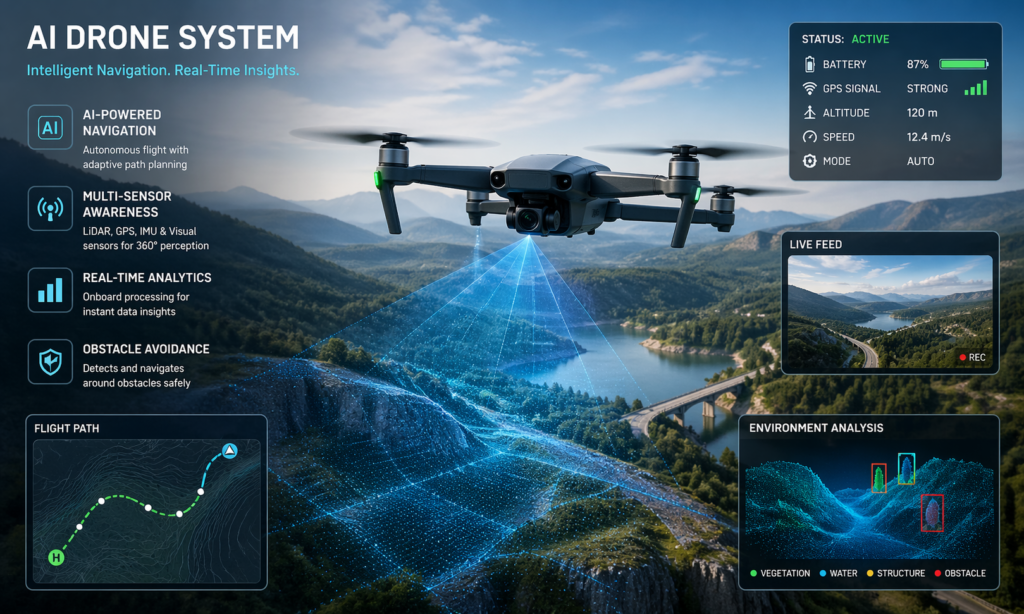
Machines will be more and more integrated in the form of an interconnected system, exchanging data and coordinating activities. This will result in smarter environments in which a number of autonomous agents collaborate with each other in a harmonious way, enhancing efficiency at scale.
Human-AI Collaboration
Most systems will not be taking the place of people, but they will be created to operate with humans. The productivity will be improved with the help of collaborative robots (cobots) that will help humans with complex or repetitive work but ensure their safety and control.
Conclusion
Intelligent autonomy is a new era being brought by the combination of Agentic AI and Physical AI. Companies within this field are creating systems capable of thinking, adapting and acting in the real world setting that are reshaping industries and changing the definition of efficiency. With the ongoing technological advancements, digital intelligence will become intertwined with physical action and more powerful and prevalent autonomous systems will be developed. Although safety, regulation and cost may be a challenge, the potential in this field is gigantic in the long run and therefore one of the most promising innovations and investments.
FAQs
What is Agentic AI?
The agentic AI is a sub-form of artificial intelligence, which can plan, make decisions and take actions to meet a given set of objectives without having to be supervised by a human.
In which areas is Physical AI being applied?
Robotics, autonomous vehicles, drones, manufacturing, healthcare, agriculture, and smart infrastructure are some of the applications of physical AI.
Are intelligent machines totally independent?
Even in autonomous systems, here most of the system still needs a degree of human control particularly in critical environments.
What are the technologies that are required in this area?
Key technologies are machine learning, computer vision, robotics engineering and edge computing.
So, what is the significance of this to startups?
The sector has a great growth potential and the possibility of disrupting the traditional industries by innovative solutions.