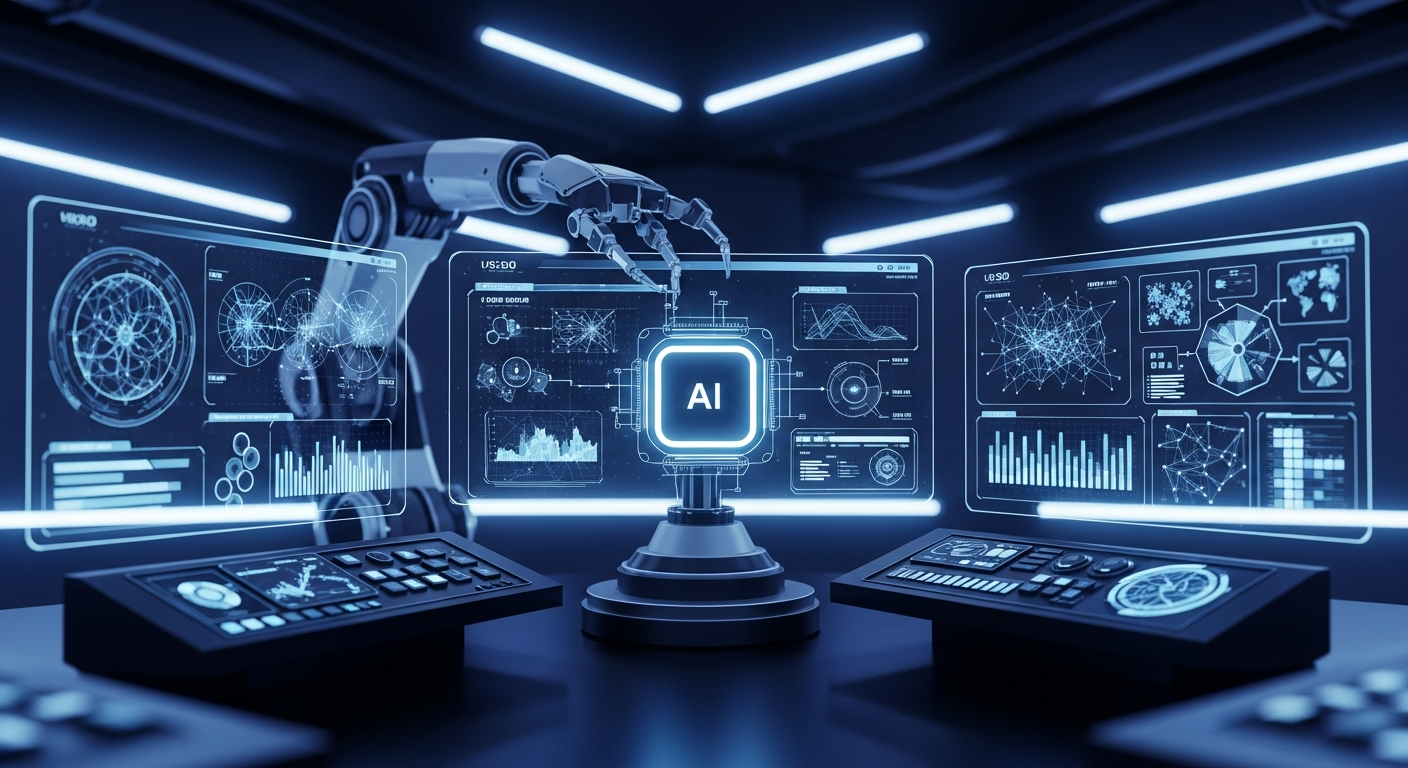
Artificial Intelligence is growing out of simple automated tools into a very advanced field of which we see independent thinking and action at the core. We are in the midst of an innovative shift which is brought about by what I would term to be agentic AI systems that put into practice decision making, strategy development and task execution with minimal to no human input. Also unlike past AI models which looked to us for most directions and instructions, today’s systems are able to study a situation, adapt to what is presented to them, and take proactive steps to achieve set out goals.
In 2026 agentic AI will be at the forefront of digital transformation in all industries. We see companies adopt these tools which in turn improve efficiency, reduce operational costs, and give them that edge in very competitive markets. As tech advances we are also to see agentic AI which beyond just improving processes is in fact redefining how organizations make decisions.
What Are Agentic AI Systems?
Agintic AI systems are digital agents which act independently to achieve set goals. They put together many features like reasoning, planning, learning, and execution into one platform. Unlike traditional AI which waits for input, agentic AI is able to see what needs doing, put that in order of priority and carry out the tasks without constant supervision.
These systems are based on advanced machine learning models which also include external tools, APIs, and real time data sources. They have the ability to adapt and respond in real time which makes them very useful in complex and unpredictable environments. Also we are seeing growth in the use of agentic AI in situations which require large scale human-like decision making.
Key Features of Agentic AI Systems
- Autonomy: Operates autonomously without constant human input which in turn enables efficient task execution.
- Goal-Oriented Behavior: Focuses on the achievement of set goals via structured planning.
- Adaptive Learning: Improves at it with time and use.
- Multi-Step Reasoning: Solves large scale issues with logic and systematic analysis.
- Tool Integration: Integrates with APIs, software, and external systems flawlessly.
- Real-Time Decision Making: Processes information as it comes in to respond to dynamic situations.
How Agentic AI Systems Work
Agente AI systems use a which is a series of steps that starts with data collection and environment assessment. They go out to many sources for this including user input, databases, and real time streams to put together a full picture. This in turn gives us accurate and current data for decision making.
Once we have the data in, we use the reasoning engine to play out different actions which in turn determines what the best move is at that time. We then break down the goal into a series of small tasks which the system takes care of using our integrated tools and platforms. Also we have put in a continuous feedback element which allows the system to check in on results and improve its methods which in turn increases efficiency over time.
Applications Across Industries
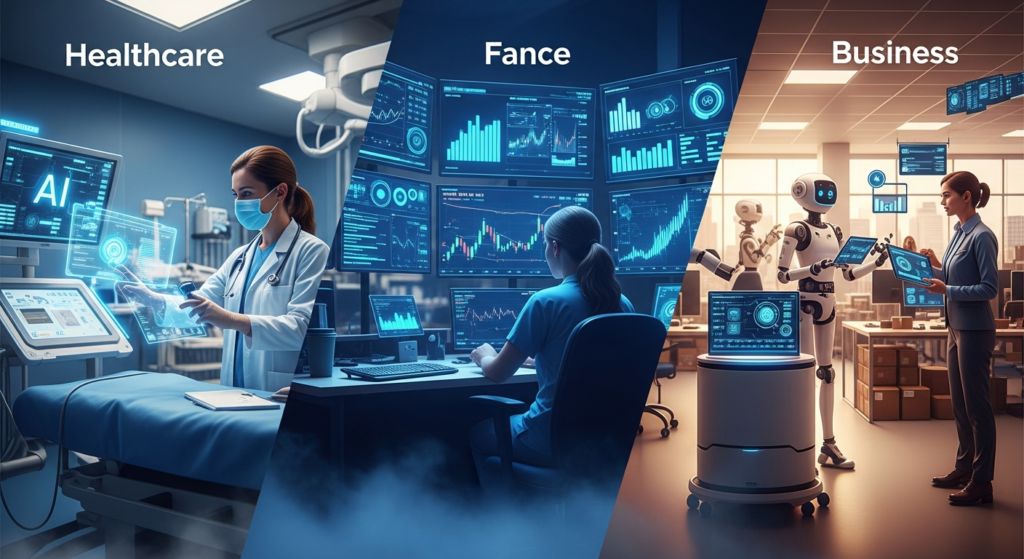
Agintic AI systems are rewiring which sectors by which they present faster and more accurate decision solutions. In health care we see these systems in action as they help in the diagnosis of disease, they put forth treatment options, and they also do real time patient health monitoring. This in turn puts less strain on health care professionals and also improves accuracy in critical health care situations.
In the field of finance, agential AI is used for fraud detection, risk management, and automated trading. It is able to analyze large sets of data at great speed which in turn allows companies to react to market changes. Also in customer service AI agents are handling complex issues, resolving problems, and providing personal experiences to the customers without human intervention.
The technology’s also playing a large role in software development and supply chain management. It is to automate code, test, and deploy processes at the same time which in turn improves logistics and inventory management. Also we see how AI is transforming many fields by improving efficiency and scale.
Benefits of Agentic AI Systems
In the case of agentic AI systems we see that their great benefit is that they increase efficiency. They do this by automating complex workflows and reducing the need for manual intervention. Also these systems improve decision making by analyzing large volumes of data in real time which in turn results in more accurate and informed results.
Another benefit is that of agentic AI which is able to take on many tasks at the same time without seeing a drop in performance. Also they feature in continuous learning which in turn improves their performance and makes them very adaptable to change. These features in turn present agentic AI as a very powerful tool for companies which are looking to see growth and innovation over the long term.
Challenges and Risks
Despite the benefits, agentic AI systems present some issues which must be put in check. We see a large issue in that they do not always present how they came to a certain decision which in turn makes it hard for us to see how we got to that point. Also this brings up issues of accountability and trust in these autonomous systems.
Security issues are also a great concern which is that these systems become targets for cyber attacks when proper protection is not in place. Also we see a trend of too much dependence on AI which in turn reduces human oversight in critical functions. Also we have issues of biased training data which leads to improper and unfair results thus the call for responsible development and monitoring.
Future Outlook
In the years to come agentic AI systems will see great change as tech continues to progress. We will see these systems become more intelligent, reliable, and they will take on more complex tasks. Also as a result of this they will play key roles in the transformation of industries and digital ecosystems.
In the coming years agentic AI will enter into autonomous businesses, smart cities, and advanced robotics. This will open up new fields for growth and transformation which in turn will change the man machine dynamic. Instead of replacing human beings these systems will augment them, thus we are headed towards a more cooperative and productive future.
Conclusion
A giant step forward in artificial intelligence is seen in what we have in agential AI systems which put to use independent operation and informed decision making. They do what it is in them to do, they adapt and they think which makes them a powerful element in today’s tech. As companies adopt more of these systems we see the opening up of what may be very efficient and innovative solutions.
While we see issues like security, bias, and ethical questions as present they do have solutions in proper governance and responsible implementation. In the rise of agentic AI we are at the start of a new age in which machines play a role not only in support of decision making but in the decision making process itself. To embrace this change is key to competing in the very digital world we are seeing take shape.
Frequently Asked Questions (FAQs)
What is a performative AI?
An advanced AI that is able to make decisions, plan actions, and perform tasks on its own without constant human input.
What is the difference between agentic and traditional AI?
In the past Traditional AI required user input for action, present day AI is able to act autonomously and proactively to achieve goals.
What is agentic AI used for today?
In healthcare, finance, customer support, software development and supply chain management.
Is it safe to use agentic AI?
It is doable if we put in place the right safeguards, ethical guidelines and security measures.
What is the role of agentic AI in the future?
In the future we will see greater automation, more intelligent systems, and deeper integration into everyday business processes.