
The blockchain technology has outgrown the original connection with the cryptocurrencies. Although digital currencies such as Bitcoin brought the world to understand blockchain, the technology has demonstrated itself to be much greater and more flexible. Organizations in any industry today are wondering how blockchain can be used to redefine how digital systems create trust, data management systems, and transaction verification.
Blockchain is a safe and trustworthy alternative to data breaches, fraud, and generally low levels of transparency that have become widespread issues in a digital economy. Blockchain can provide transparency and remove the risk of unauthorized changes in data because it creates decentralized and tamper-resistant systems. Blockchain is becoming one of the important technologies in establishing trust in the digital age as businesses and governments seek improved means of ensuring the security of digital information.
The History of Blockchain Technology.
The next technology that gained recognition throughout the world was blockchain, as the technology of cryptocurrencies. It enabled customers to move digital money without necessarily using banks and financial institutions. Nevertheless, analysts soon started to notice that the fundamental capabilities of blockchain, including decentralization, transparency, and security, can be extended to numerous other sectors outside of digital money.
A blockchain is a decentralized digital registry in which information is contained in blocks that are bound together sequentially in time. A block has the information of a transaction and is validated by several computers in the network. After a block is appended to the chain, it cannot be easily modified, and this guarantees the integrity of the information stored in it.
With time, organizations started to consider blockchain to be applied in a number of ways, including maintaining secure records and transparent supply chains, as well as automated contracts. With the ongoing digital transformation in the world of industries, blockchain is gradually being considered as a building block of the current digital framework.
The Strength of Digital Trust with the Help of Blockchain.
Digital trust can be described as the trust that individuals and organizations attribute to the security and reliability of digital systems. Blockchain enhances the trust in the digital environment by providing a mechanism that can guarantee transparency, accountability, and security.
Immutable Data Records
Immutability is one of the most significant qualities of a blockchain. Once the data has been added to a blockchain, it is difficult to alter or remove it. It implies that transaction records will be permanent and reliable, mitigating the chances of fraud or manipulation.
Decentralized Verification
Colonial control, unlike in a traditional system that has one central authority, blockchain controls are spread out in a network of multiple nodes. The presence of all participants contributes to a system that checks transactions, and thus the system is more resilient and less prone to single points of failure.
Advanced Cryptography Security.
Blockchain systems have robust cryptography and encryption to protect information. This will guarantee only authorized transactions are documented, and this will prevent sensitive information from being subjected to cyber threats.
Uses of Blockchain in the Real World.
The use of blockchain technology has now reached a huge variety of industries in which data management through secure and transparent means is crucial.
Supply Chain Management
The process of monitoring product flow between manufacturers and consumers may be challenging in global supply chains. Blockchain offers an open platform in which the lifecycle of a product is mapped out and authenticated. This assists the companies to avoid fake products, enhance the logistics, and heighten the sense of responsibility amongst the suppliers.
Healthcare Data Management
Healthcare organizations have to deal with enormous amounts of sensitive patient data. With the help of blockchain, medical records can be stored safely, and when the authorized doctors and hospitals require access, they can get the information. This will increase the accuracy of data and optimize the coordination among medical caregivers.
Digital Identity Systems
The digital world is of primary concern when it comes to identity theft and fraud. Blockchain allows the implementation of safe digital identity processes, in which people themselves manage their credentials. Users do not need to disclose their personal information to many organizations repeatedly, but they can authenticate their identity based on blockchain technology.
Smart Contracts and Financial Services.
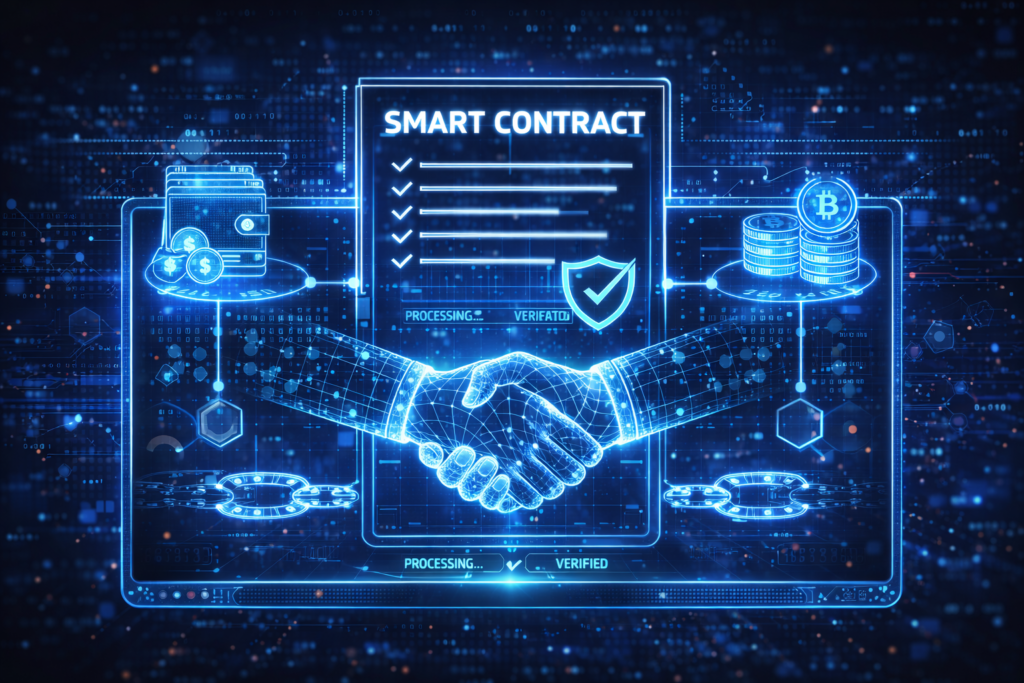
Banks are looking into the blockchain as a method to enhance payment systems and automatically sign financial contracts. Smart contracts are self-executing contracts that are documented in the blockchain and are automatically performed once some conditions are satisfied. This saves paperwork, accelerates processes, and ensures that there is a minimal human error.
Government and public/minimal sector.
Governments are also trying blockchain to enhance efficiency and transparency. Some of the possible uses are secure voting systems, land registry management, and open public records that minimize corruption and boost confidence by the population.
The advantages of blockchain to businesses.
There are a number of operational benefits that organizations that implement blockchain technology can receive.
Greater Transparency
Blockchain offers a distributed register on which all participants will access the same, verified information. Such openness fosters confidence among the business partners, vendors, and clients.
Improved Data Integrity
Since blockchain records are not quite easy to edit, businesses can make certain that their data is correct and reliable.
Reduced Operational Costs
Through the removal of middlemen and automating procedures with smart contracts, companies lower the cost of administration and become more efficient.
Faster Transactions
Taking into consideration traditional systems where various layers of verification are conducted to carry out a transaction, blockchain systems are quicker.
Blockchain Adoption Problems.
Nevertheless, there are some obstacles to the use of blockchain even with its advantages.
Scalability Issues
There are blockchain networks that fail to process very high volumes of transactions. Developers and researchers are busy coming up with scalability solutions.
Regulatory Uncertainty
Rules concerning blockchain technologies are still being formulated in many countries. This ambiguity can drag the adoption pace by those businesses that would be in need of clear legal provisions.
Technical Complexity
Implementation of blockchain in the existing digital systems may need special knowledge, infrastructure, and expenditure.
Conclusion
The blockchain technology is fast developing beyond cryptocurrency and is now a potent instrument to establish digital trust. Blockchain can offer solutions to numerous problems of the digital systems of the present day through transparency, security, and decentralized verification.
With the further digitization of industries, blockchain can become an infrastructure layer that guarantees secure transactions, data sharing that remains open and transparent, and automatization of processes. Companies entering the blockchain as an innovation nowadays could have a competitive edge in the digital economy of the future.
Finally, blockchain is a transformation of a more reliable and effective digital space—a place where data integrity, disclosure, and protection are inherent to the technology.
The Frequently Asked Questions (FAQs).
1. What is blockchain technology?
Blockchain is a decentralized online registry that documents dealings on a variety of computers. The documents are safe, visible and cannot easily be altered even after being stored.
2. So why is a blockchain other than cryptocurrency important?
Blockchain has the ability to enhance security, transparency, and efficiency in most sectors like healthcare, finance, logistics, and government services.
3. What are blockchain smart contracts?
Smart contracts refer to computerized digital contracts that can be automatically executed on the blockchain network when a set of specified conditions are fulfilled.
4. What industries are the best applications of blockchain?
Blockchain technology is very useful in industries, including finance, healthcare, supply chain management, digital identity verification, and the public administration.
5. Is blockchain fully secure?
Although blockchain has great protection in terms of encryption and decentralization, appropriate implementation and management are also considered to achieve full protection.