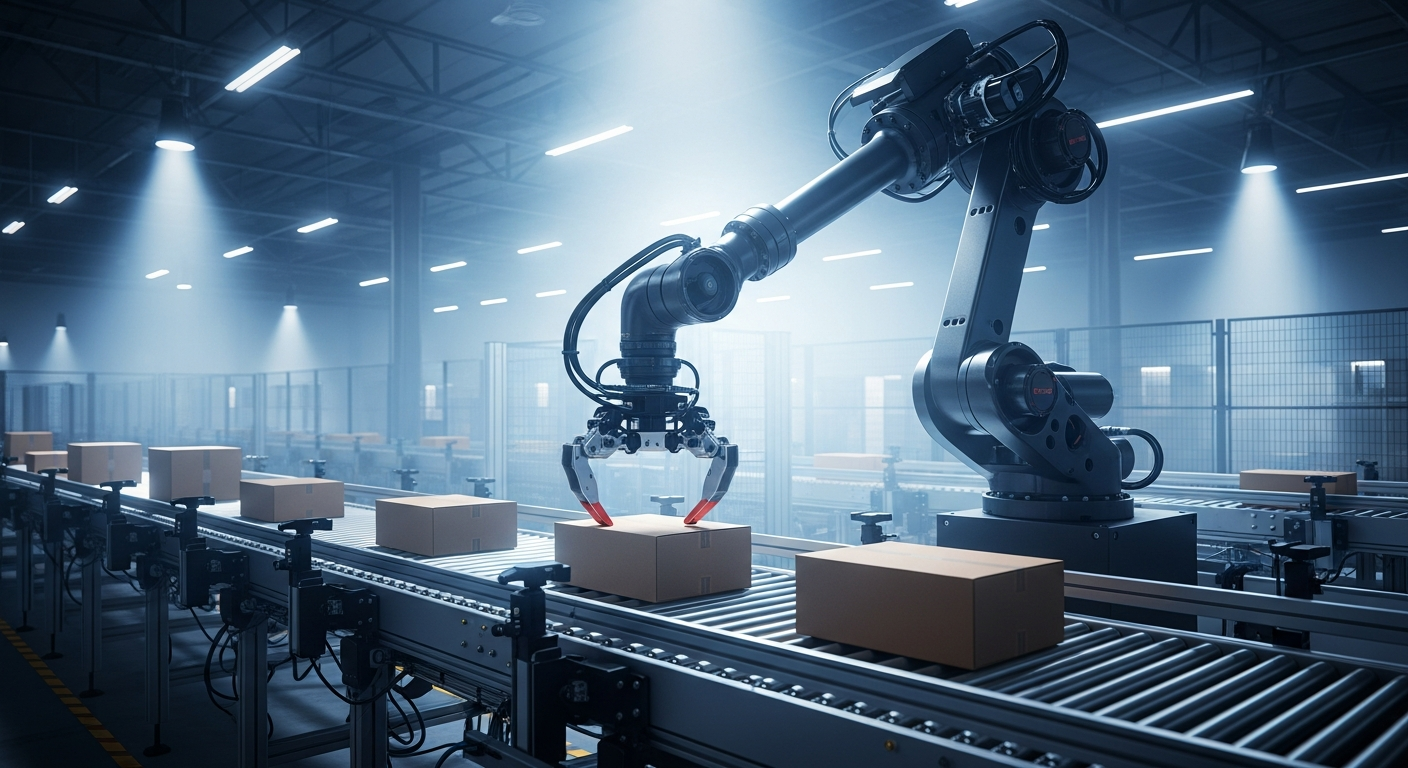
The self-driving car, robotics, and artificial intelligence-enabled autonomous technology scene are shifting at an insane rate, with startups in both directions. These startups are designing machines and cars that can act independently and enhance efficiency in all industries and change the human-machine interaction. Autonomous solutions are entering everyday life; warehouses to hospitals and streets of cities, they are everywhere.
New entrants operating in this market are integrating artificial intelligence and robotics with sophisticated sensor systems to create new systems capable of sensing, learning, and acting in the real world. As cities become overcrowded, companies face labor shortages and increases in the costs of operations, these innovations offer scalable solutions, which may change whole industries. Investors are also placing a lot of interest in such startups, as they can grow in the short run and disrupt in the long-run.
Canlijan: By 2025, the world will spend over 12 billion to fund autonomous technology ventures, of which approximately 40 per cent went to hardware (LiDAR, sensors), 35 per cent to AI software, and 25 per cent to robotics platforms/SaaS.
The major Innovations in Autonomous Technology Startups.
Self-governing technology start-ups are leading the way in robotics and artificial intelligence to address multi-faceted problems in the real world. They have innovations in industrial automation, health care, urban mobility and logistics.
H3: The integration of robotics and AI.
Start-ups in robotics now include AI-based decision-making in the machines. This enables the robots to complete repetitive or dangerous tasks in a safe manner, learn through the surrounding world and enhance efficiency in the long term. Warehouses, hospitals and even homes are robotizing through AI-enhanced robots to help in daily chores.
Canlijan: It has been demonstrated that automation of warehouses based on AI-driven robots could decrease human error by 30-40 and enhance the operational throughput and reduce labor expenses.
H3: Self-driving cars and Navigation.
AI applications Self-driving car companies are working on AI able to deal with complicated city traffic. These vehicles can detect and predict movements as well as navigate safely because of advanced algorithms, LiDAR sensors, and computer vision models. Rapid technological advancement is observable with regard to the Level 4 and Level 5 autonomy vehicles currently being tested in cities around the world.
Calixta: Pilot research indicates that autonomous navigation systems can enhance the level of efficiency of routes up to 1525 percent, lessening the use of fuel and operational delays.
The 5 best advances in autonomous startups.
- Numerous startups specialize in a particular innovation to scale autonomous systems and make them effective. The most effective discoveries are:
- Collaborative Robots: Collaborative robots are expected to work with human beings in a safe and efficient way.
- AI-Powered Decision Making: Algorithms that will help machines to behave independently in dynamical settings.
- Independent Logistics: Inventory control and delivery of goods by robots and drones.
- Healthcare Robotics: Developed devices that help in the surgeries, patient care, and diagnostics.
- Sensor and Hardware Innovations: LiDAR, cameras, and actuators to be able to feel the truth.
The combination of these five innovations could be seen as the core of autonomous technology, which allows startups to increase the scope of operation, but with fewer costs and fewer mistakes.
Canlijan: Surgical robots increase accurate work by more than 20 percent than manual methods, resulting in a faster recovery of patients and the reduction in complications.
Robotics Startups: The Future of Industries.
H3: Industrial Automation
The new generation robotics companies are automating the process in factories, handling repetitive activities with accuracy. AI robots are capable of assembly, packaging, and quality check and the error of human workers during the pilot phase could be decreased by up to 3040 percent. This does not only enhance productivity but also safer working conditions.
H3: Healthcare Applications
Startups in healthcare robotics are also coming up with machines that will facilitate surgery and rehabilitation, as well as patient monitoring. Surgical robots are artificial intelligence that enhances accuracy by 20 percent, shortening recovery time and injuries.
H3: Service and Personal Robots.
Robots of service are invading households, offices, and shopping areas. These machines have the capability of delivering goods, help in the household chores, or offer companionship. Personal robotics Startups are using AI and natural language processing to improve user interaction.
Self-Driving cars: The future of the world.
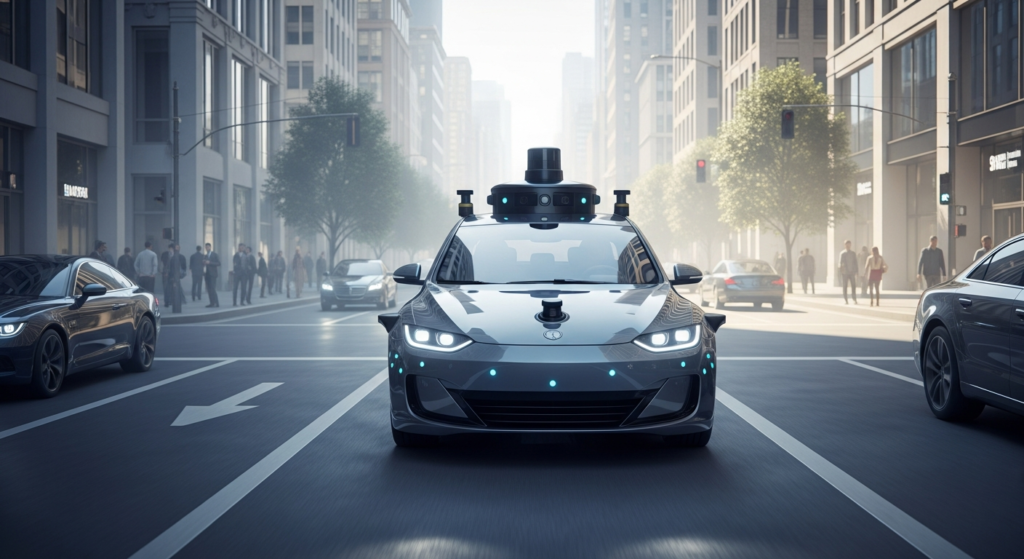
Self-driving cars are changing the movement of people in the city. Designing Humanless Systems Startups are developing systems that can operate without a human operator, generate fewer traffic accidents, and be efficient.
H3: Last-Mile Delivery Solutions.
Robots in the form of autonomous vans, delivery drones, and drones are simplifying logistics. According to companies, the last-mile delivery with autonomous systems may save the company 1525 percent of operational costs based on the density of a route and the volume of packages.
H3: Public Transportation Integration.
Self-driving vehicles are being incorporated into transit systems by startups. The AI systems are used to optimize the routes, minimize idle time, and increase the safety of passengers. Those cities that have embraced the use of autonomous buses or shuttles have indicated efficiency in their services and reduced carbon emissions.
Canlijan: It is indicated by studies that autonomous buses are able to decrease the time taken by urban transit by 1020% in addition to reducing the amount of fuel and emission.
Funding and Growth Trends
Self-governing technology start-ups are getting considerable investments. By 2025, investors had become confident as funding in robotics and autonomous vehicles had reached more than 12 billion worldwide. The most venture capital is being drawn to startups that have scalable AI and sensor based solutions.
- Other areas like hardware innovation (LiDAR, sensors) take about 40% of financing.
- Practically, AI programs and self-driving technology get a share of about 35 percent.
- The rest 25 comprises robotics platforms and SaaS integration.
These investments can allow quick prototyping, regulatory testing and massive deployments. Combinations of AI, robotics, and mobility solutions are typically worth more because these solutions can be used across different sectors.
Difficulties and Future Prognosis.
Even though autonomous startups are growing fast, they also have obstacles, such as regulatory challenges, lack of trust, a threat to cybersecurity, and the cost of R&D. New legal rules are emerging and startups need to adjust to them.
Communal approval is a critical issue. The surveys indicate that although 65 percent of urban commuters are interested in autonomous cabs, only 40 percent believe in autonomous deliveries that are fully autonomous. The issues of safety, reliability and transparency will be one of the most important in order to scale such technologies.
The future looks bright: autonomous systems will keep being adopted across industries, homes and transportation infrastructure to make cities smarter and work processes more efficient. AI, robotics, and autonomous vehicles are three technologies that work well together to set the change in the direction of success.
Conclusion
Independent technology startups are transforming industry, city, and life in general. Increased costs reduced, more efficient warehouse optimization through AI-enhanced robotics, and more efficient urban mobility through autonomous vehicles, the innovations are more cost-effective, safer, and more productive. Although the obstacles to growth and influence, such as regulatory compliance, cybersecurity, and the confidence of the population, are still present, the possibilities to grow and influence are immense.
As more and more is invested, technology is enhanced, and the technology is diligently embedded into the real world, autonomous startups will become the next generation of innovation. With the convergence of AI, robotics, and autonomous systems, any business and community that adopts these technologies will have a large competitive edge, and will help usher in a smarter, more efficient and sustainable future.
Frequently Asked Questions (FAQs)
Q1: What is an independent technology start-up?
An AI start-up that develops AI driven systems that work with limited human input.
Q2: What industries are autonomous startups the most?
The most affected areas are healthcare, logistics, manufacturing, and city mobility.
Q3: What are the ways self-driving vehicles decrease operational costs?
They reduce human error, maximize routes and reduce labor costs.
Q4: What are the primary issues of such startups?
Issues such as regulations, cybersecurity, excessive costs in terms of R&D, and trust by the population are crucial.
Q5: What can investors do?
By venture capital financing, strategic alliances and equity financing.