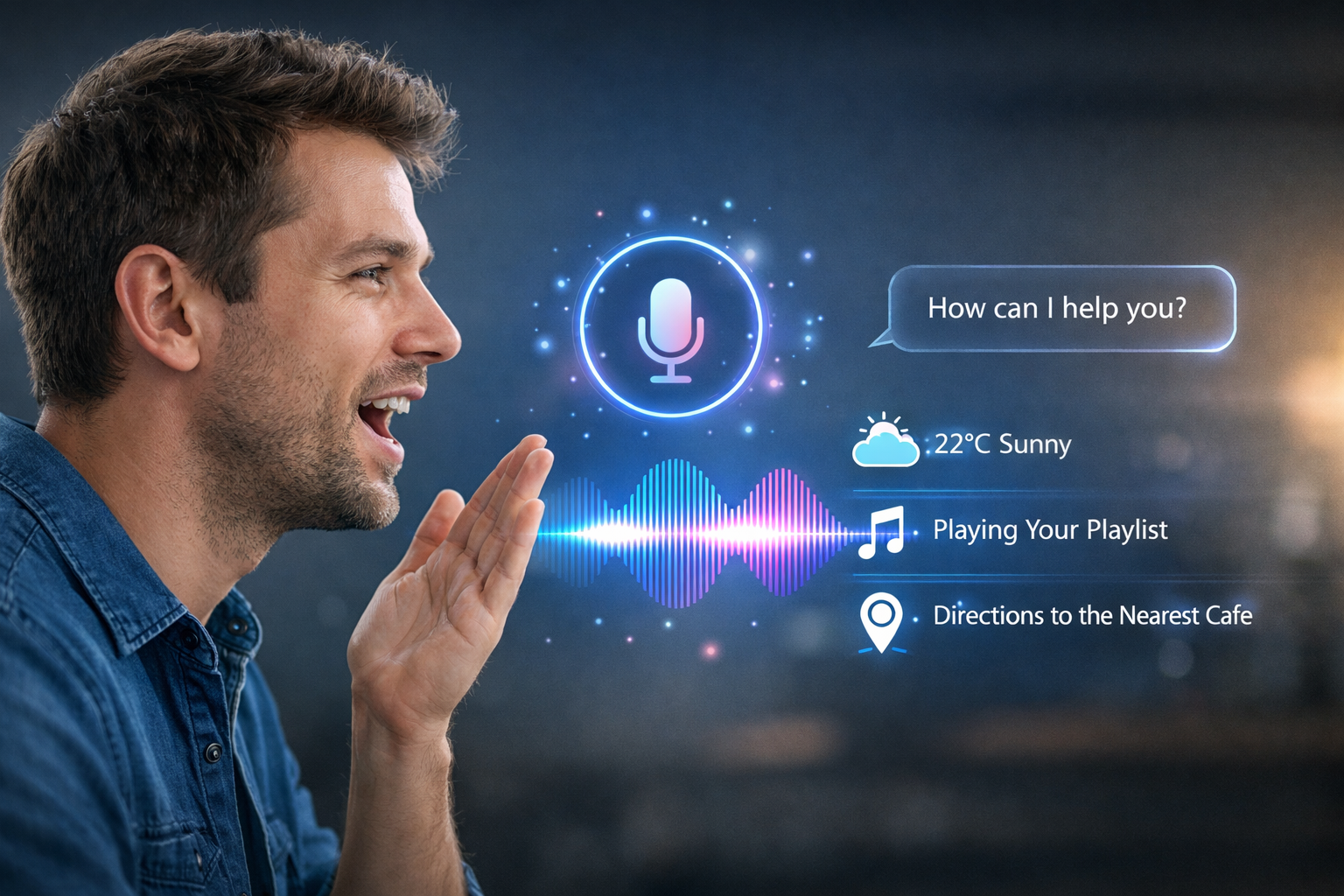
In 2026, zero-UI AI will radically change human experience with technology, with a focus on invisible and smooth interactions, and no screens and apps.
Users can now interact with devices by voice, gestures, and contextual behavior, rather than tapping icons, or navigating complicated menus, making the overall experience more natural and intuitive.
This development is a subset of an overall trend towards ambient computing, in which the technology is unobtrusive and functions in the background to support the user, without requiring attention to be paid to it.
What is Zero-UI AI?
Zero-UI AI is a design methodology in which conventional graphical interfaces are eliminated or reduced to a minimum, and users interact with systems without screens or other apparent controls.
It is based on artificial intelligence to read user intent, context and automatically perform actions to provide a frictionless experience that is highly consistent with human behavior and expectations.
The operation of Zero-UI AI.
Zero-UI AI functions as a complex of sophisticated technologies cooperating to comprehend, learn and react to the needs of the user in real-time.
These systems constantly gather and process information based on various sources including voice input, sensors and environmental stimuli to respond precisely and in a personalized way without necessarily having to be interacted with by the human being.
Fundamental Technologies.
- Spoken language voice recognition system which transforms voice into instructions.
- NLP to comprehend meaning, tone and intent.
- Computer vision to detect gestures and the environment.
- Algorithms based on machine learning that become more efficient with time.
The Reason Zero-UI is replacing Traditional Apps.
The most common thing about traditional applications is that users are forced to take time and energy to navigate interfaces, which may discontinue workflow and efficiency.
Zero-UI AI removes these obstacles because it provides users with the ability to complete tasks immediately by making the slightest interactions, making technology more accessible and not as intrusive in everyday life.
Practical uses of AI Zero-UI.
Zero-UI AI has already been adopted into an array of industries proving its feasibility and disruptive nature in a range of applications.
These systems are making life more convenient, efficient, and enjoyable by eliminating the need to manually input commands into them all the time, whether it is in the smart home or in healthcare.
User Experience Transformation
Zero-UI AI is literally transforming the way user experience is being handled; it is making interaction faster, easier and more intuitive than ever before.
Users do not need to learn how to use technology, but can also engage with it just like they would other human beings, making it simple and more reachable to individuals of all ages and of both technical and non-technical backgrounds.
Context Awareness Role.
Context awareness is an important element in ensuring that Zero-UI AI is effective because it allows the systems to know what users are saying and the context under which they are saying it.
AI can respond more intelligently and provide more relevant and proactive actions by taking into account the factors of location, time, behavior patterns and environmental conditions which make them feel personalized and intelligent.
Challenges of Zero-UI AI
Although Zero-UI AI has numerous benefits, it also comes with a number of challenges, which need to be resolved in order to implement this technology and make it acceptable by a large number of people.
Things like privacy issues, data security, and interpretation accuracy may affect the confidence of the users and the developers need to ensure that they develop reliable and transparent systems.
Considerations of Privacy and Security.
Since Zero-UI AI systems are largely dependent on an ongoing data gathering procedure and real-time monitoring, privacy and security become a significant issue to users and organizations.
Making user data safe, encrypted and responsibly utilized is paramount to building trust and motivating the adoption, particularly as these systems become more and more integrated with day to day life.
Future of Invisible Interfaces.
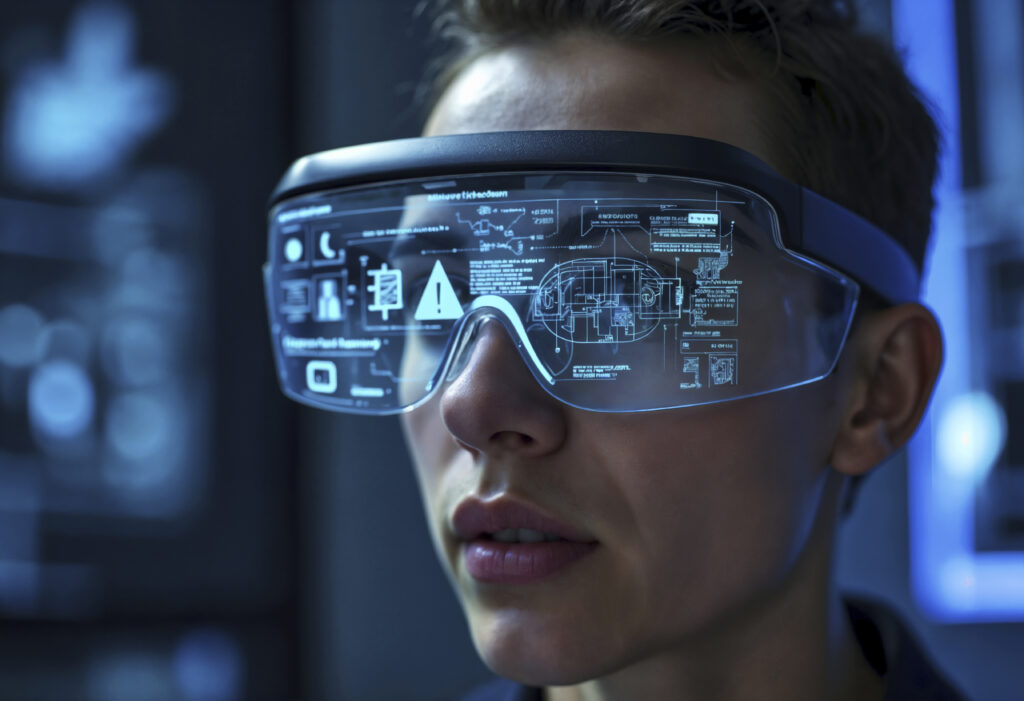
The future of the Zero-UI AI is the world in which technology will be virtually invisible, will be silent in the background, and will predict users’ needs.
With further progress in the field of AI, the systems will become more predictive, more personal, and more incorporated in the natural environments, lessening the need to operate conventional gadgets, such as smartphones.
What to Expect Next
- Artificially intelligent systems which anticipate the needs of users prior to issuing commands.
- Fluid integration between a variety of devices and platforms.
- Additional use of wearable and ambient technologies.
- Greater humanization of interactions with digital assistants.
Businesses and Developers.
Zero-UI AI is transforming the nature of product design in business and how the developer will consider technology solutions in a fast changing digital world.
Organizations should now think more about creating experiences than interfaces and developers should develop systems that are more about conversation, automation and intelligence than visual design.
Conclusion.
Zero-UI AI is one of the significant changes in technological development, shifting to non-visual interfaces to more intuitive experiences that are more in line with human behavior.
It can transform the way individuals interact with digital systems in their everyday lives, by making them less frictional and more accessible.
Despite them, the further development of AI technologies is likely to enable Zero-UI to be the new standard of the interaction, as it will bring the world closer and allow it to become smoother.
FAQs
1. What is Zero-UI AI simply put?
Zero-UI AI enables screens-free interaction with technology by voice, gestures, or by context-driven automation.
2. Will Zero-UI AI eliminate mobile apps?
It is not completely taking the place of apps yet but is more than diminishing their significance.
3. What is Zero-UI AI being applied to?
It is widely employed in smart homes, wearables, vehicles, and in healthcare.
4. What are the risks of Zero-UI AI?
Some of the primary concerns include privacy, misuse of data and inaccurate responses.
5. What is the Zero-UI AI Future?
The future is more predictive, personalized and completely automated digital experiences.